Home / What to Say / How to Respond to "I Don't Want to Ruin Our Friendship" (Without Blowing It)
How to Respond to "I Don't Want to Ruin Our Friendship" (Without Blowing It)
It's not a no. It's a test. Here's how to pass it.
What she actually said
She didn't say she doesn't like you. She said she's scared of losing something. Those are two completely different statements, and which one you respond to determines everything that happens next.
'I don't want to ruin our friendship' is not a restraining order. It's a moment of vulnerability dressed up as a rejection. She's telling you she values what you have, she's uncertain about what comes next, and she wants to see how you handle the uncertainty. Most guys fail this test immediately, not because they said the wrong thing, but because they let the panic show. They over-explain, they guilt-trip, they apologize for existing, or they disappear and come back weird. Any of those responses confirms her fear: that this is going to cost her the friendship. Your whole job in this moment is to show her it won't.
She's not shutting the door. She's seeing if you'll panic when she puts her hand on it.
The principle: calm is the move
Confidence in this moment isn't some aggressive 'I'll change your mind' energy. It's the opposite. It's the guy who hears 'I don't want to ruin our friendship,' takes a breath, and replies like a person who has other options and a fully functional life. Not cold, not dismissive, not wounded. Just solid.
Here's why that works. When she says it, she's bracing for a reaction. She's expecting either the Sad Guy (all the feelings, all the explanation, all the emotional weight landing squarely on her) or the Vanishing Guy (fine, see you never). What she's not expecting is a man who goes 'yeah, I hear you, we're good,' and then actually means it. That response is rare enough to be interesting. It tells her you weren't betting everything on her answer. And paradoxically, that's the version of you she's most likely to reconsider.
You can be honest without being heavy. You can hold your ground without being a jerk about it. The whole tone you're going for is: I said what I said, I meant it, it's not a crisis, and I'm not going anywhere weird.
✦
Are you a Simp or Player?
Take the dating spectrum quiz to find out where you fall.
Keep it short. The urge to send four paragraphs is going to be strong, because you've probably been thinking about this for a while and now there's a lot to say. Resist it completely. A long reply tells her this is a bigger deal than she realized, which is the opposite of the 'calm guy with options' frame you're going for. Three to five sentences maximum. Maybe less.
Acknowledge what she said without agreeing that your feelings were a mistake. There's a real difference between 'I hear you and I respect that' and 'you're totally right, I'm so sorry, forget I said anything.' The second one sounds like relief but it's actually self-erasure, and she'll sense it. You're not apologizing for noticing you liked her. You're just noting her concern and making it clear it won't become her problem.
Leave the door open without camping in front of it. 'Offer stands' is four words that do a lot of work. It tells her the attraction isn't going anywhere, you're not giving her an ultimatum, and you're not holding your breath. It's a supremely low-pressure move. Then you actually have to mean it, which means going and living your life and not texting her eight times in the next week to see if she's changed her mind.
'Fair enough. offer stands if you ever change your mind'
'I get it. I'll survive. still down to grab food Thursday if that's still on'
A short, light reply that shows you're unbothered and not going anywhere dramatic
Never send this
'I just feel like you're making a mistake'
'So what, we just pretend I never said anything?'
'I thought you felt it too' (even if you did, this is a guilt trip in disguise)
Leaving her on read for two weeks and then texting like it never happened
The re-entry play
If you handled the initial response well, time is now your friend. Give it a few weeks of genuinely normal interaction. Not forced normal, not 'see how chill I am' normal, actual normal. Talk to her the way you would any friend whose answer you'd already accepted. Because you have accepted it, at least provisionally, because you're a person with a life and other options, right?
Then, when enough time has passed and there's a real thing happening in your actual life, invite her into it. Not a re-ask, not a 'so have you thought about it.' Just a casual low-stakes invite: you're going somewhere fun with a few people and she should come. Let her see you in your natural habitat. Let her remember why she liked you in the first place. Sometimes this changes nothing. Sometimes it changes everything. Either outcome is genuinely okay.
What you cannot do is the thing that ruins more actual friendships than the asking ever does: the resentful orbit. That's where you stay in her life, stop being honest, collect grievances in silence, and slowly start hating her for a choice you never actually accepted. She can feel that energy from a mile away. It poisons everything. If you can't genuinely be her friend right now without it eating at you, the honest move is to say 'I need a little space to reset, nothing dramatic, I'll be back' and then actually take it. That's more respectful to both of you than the slow simmer.
✦
Out of first date ideas?
Get date plans that actually go somewhere, tuned to your vibe.
honestly fair. I'm not trying to make things weird. but I also wasn't going to pretend I didn't feel it
I appreciate that. I just don't want things to change between us
they won't change because of me. if it's a no it's a no, I'll survive
Why this works: You're not arguing, not guilting, not evaporating. You said the thing, acknowledged her concern without agreeing that your feelings were a problem, and then projected complete calm. The last line is the key: 'I'll survive' signals abundance. She can feel the difference between a guy who needs this and a guy who simply wanted it.
Reframe with a little edge
the friendship is already intact. I asked you out, not for a kidney
haha okay fair. I just get weird about this stuff
noted. offer stands, no expiration date. no pressure either way
Why this works: The light comedy deflates the drama she's building around a normal thing. Then 'offer stands, no expiration date' is one of the most confident moves in this playbook: you're not withdrawing, not begging, just calmly leaving the door open. That's a man who has options. It's quietly attractive.
Honest and direct (for a close friendship)
I get it. and I'm not going anywhere. but I'd rather tell you and have it be a little awkward than say nothing and just wonder
that's actually really mature of you
don't say that too loud, I have a reputation to protect
Why this works: For a real friendship, transparency matters more than game. You're owning the move without apologizing for it. The closer of 'I have a reputation to protect' keeps the emotional temperature from going full therapy-couch, which is what you want. It tells her you're not going to make this a whole thing.
The soft re-open (weeks later)
random but I'm going to that new place on Division Saturday, you should come
oh yeah? who's going
a few people, you'd know some of them. low key
Why this works: You didn't disappear, but you also didn't camp outside her window. A few weeks of normal behavior, then a genuinely casual invite into your actual life. You're not re-asking, you're just living, and showing her there's no weirdness. Sometimes she changes her mind when she sees you're not orbiting her. Sometimes she doesn't, and you've already moved on. Both outcomes are fine.
Common Mistakes
Sending a wall of text explaining all your feelings in detail
'But I really think we could be great together' — arguing for yourself like it's a job interview
Disappearing completely and then reappearing a week later acting normal as if nothing happened
The slow fade into resentful orbiting — still around, still hoping, never honest
Saying 'I understand' and then texting three times the next day
Asking 'so are we good?' repeatedly until she has to say yes to make it stop
The honest part
You shot your shot and she didn't say yes. That's it. That's the whole story, except the part you write from here. The friendship survives or it doesn't based almost entirely on how you carry yourself in the next two weeks, not on what she said. Be the version of yourself who meant it when you said you'd be fine, then go be fine. That's not a performance. It's the actual move.
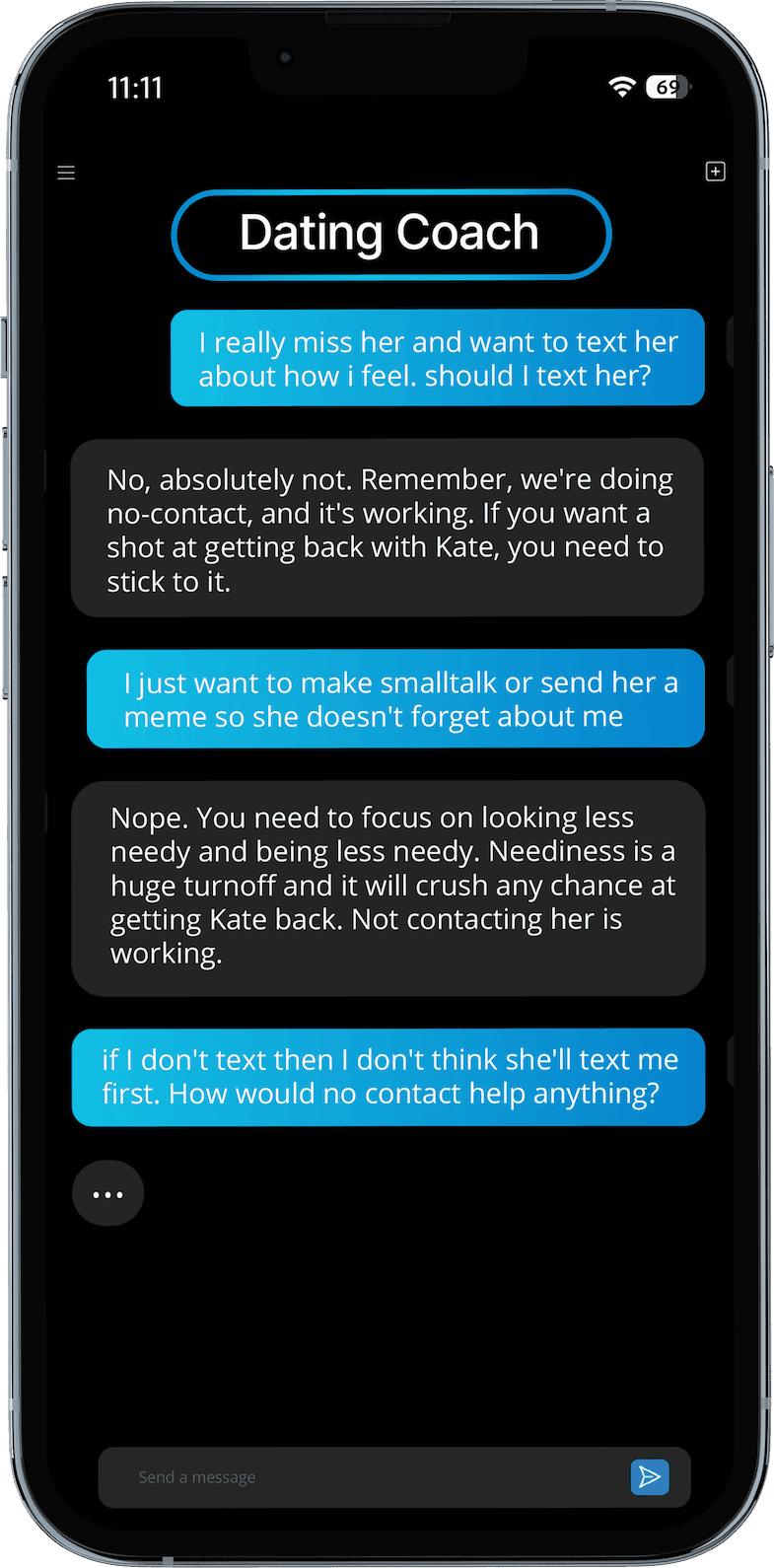
Meet your AI dating coach
Get the Best Advice
Wingman is the AI dating coach with answers to every dating question, 24/7.